
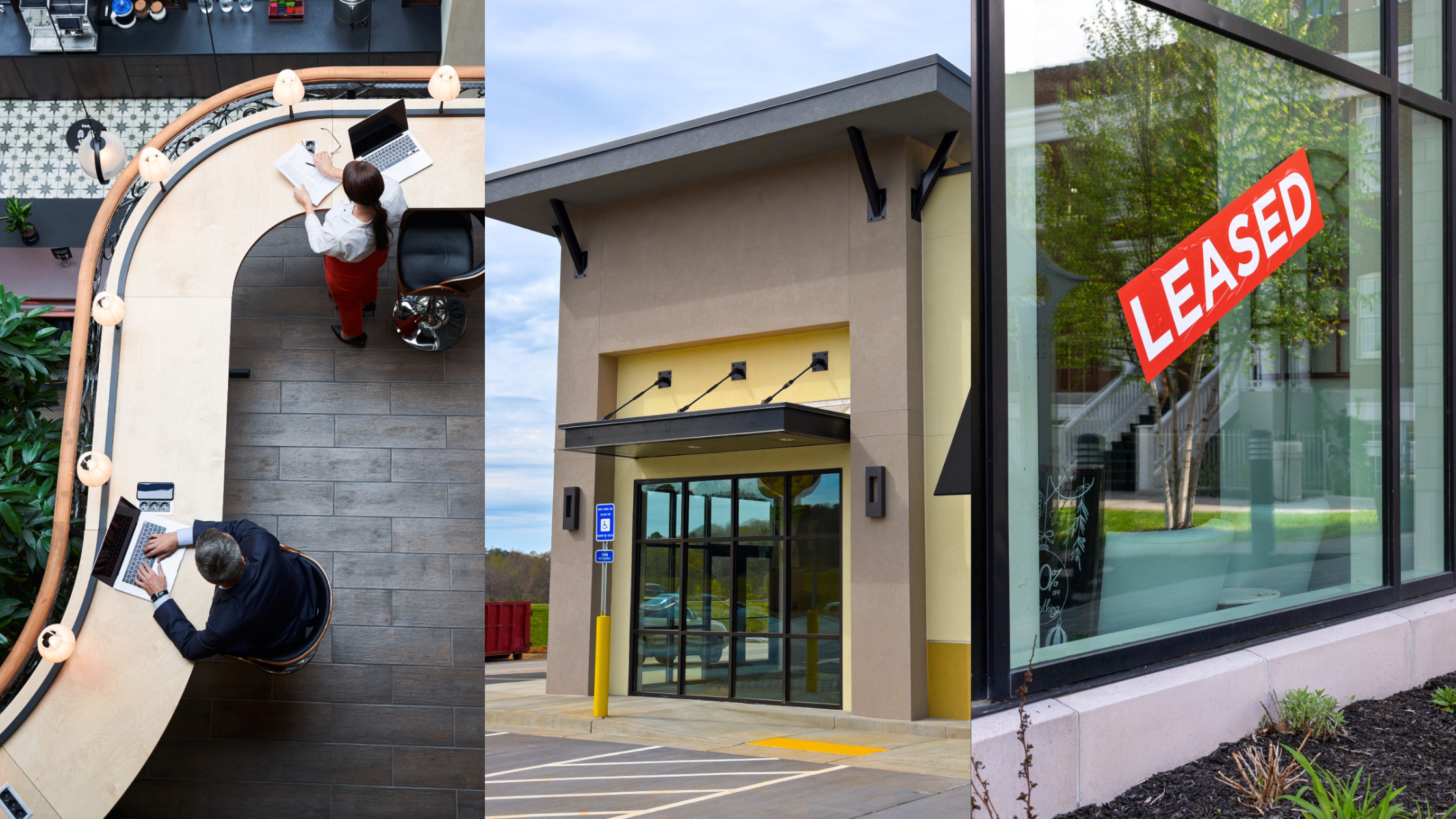
Workplace strategies across commercial real estate are evolving as organizations respond to changing work patterns, capital markets, and asset performance. From how office space is furnished and utilized to how properties are repositioned or acquired, decision making today requires greater flexibility and discipline.
Evolving Workplaces Include Multifunctional Furnishings
Recent approaches to office workplaces emphasize modular workstations, multifunctional furniture, and standardized systems that allow environments to adapt as work styles and headcounts change. Rather than treating furnishings as static décor, organizations are increasingly using them as strategic infrastructure to improve utilization, reduce future rework, and support hybrid operations. The result is an office environment that aligns more closely with its company’s brand and culture while remaining resilient as business needs evolve.
Adaptive Reuse to Align with the Market
Investors are increasingly using adaptive reuse as a practical response to shifting market conditions. This is particularly true when the existing property type no longer aligns with demand, or capital markets tighten. What is often viewed as creative redevelopment is more frequently a defensive move that aims to protect value, stabilize income, and extend an asset’s long-term viability. Early market signals across transactions, leasing, and capital markets can indicate when a property’s current use is under pressure. Successful conversions tend to depend on disciplined financial analysis, regulatory feasibility, and timing. In the right conditions, repositioning can serve as an effective tool for managing risk rather than chasing growth.
Should You Buy or Lease Office Space?
Deciding whether to buy or lease office space has become more complex. While leasing offers adaptability and capital preservation, ownership provides control, predictability, and potential long‑term value. Recent challenges include hybrid work, higher interest rates, and widening performance gaps across the office market that reshape the decision framework. Capital availability, flexibility needs, risk tolerance, and long‑term plans all factor into the choice as well. All in all, there is no default answer to whether buying or leasing an office space is best. The final decision must be evaluated through total occupancy costs, time, and business stability.
Today’s office and investment decisions are less about one‑size‑fits‑all solutions and more about alignment, timing, and execution. Organizations that approach furnishings, asset strategy, and occupancy with clear objectives and disciplined underwriting are better positioned to navigate change and preserve long‑term value.