
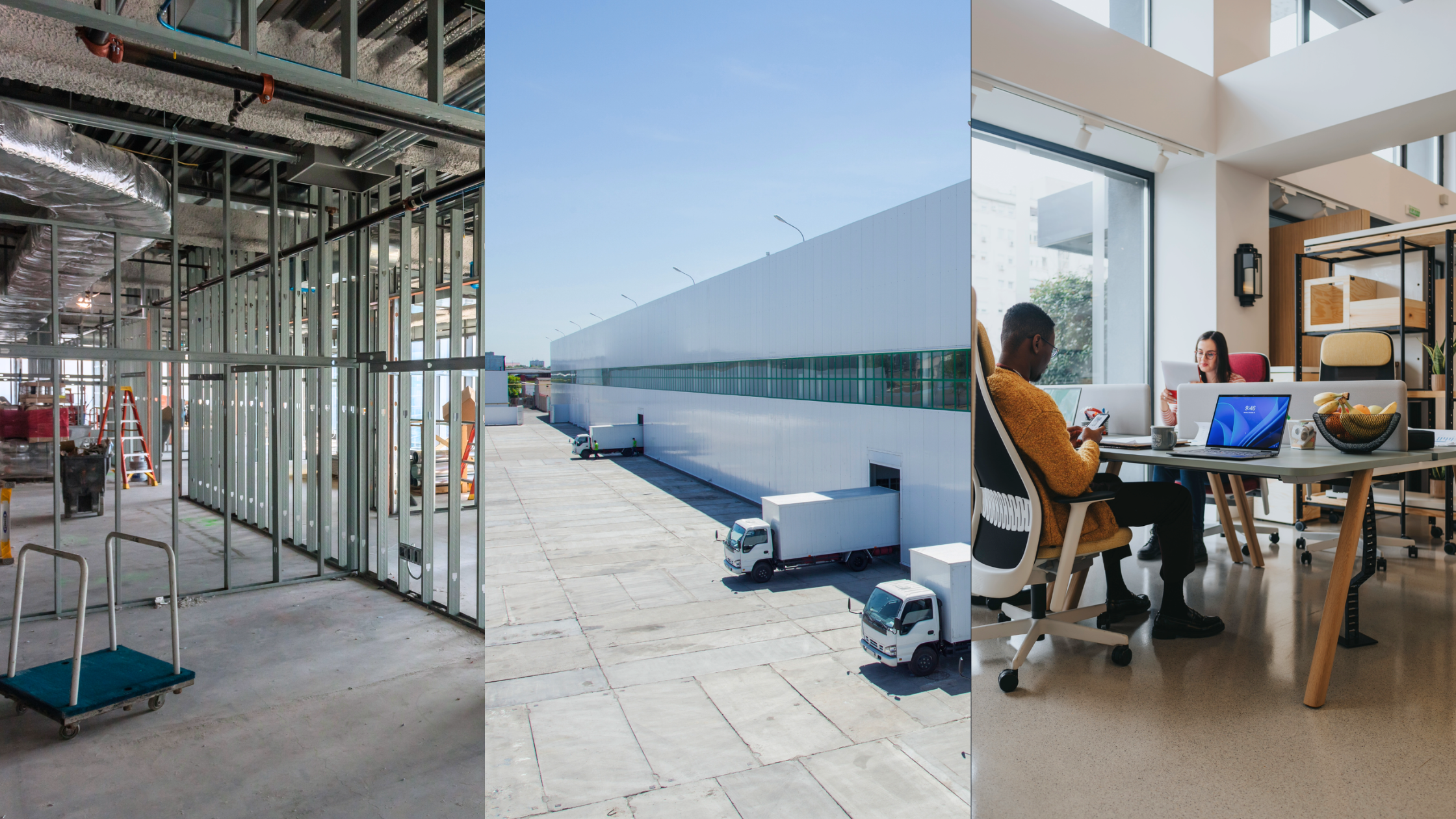
As businesses adapt to shifting work patterns and economic conditions, commercial real estate stakeholders are reassessing how properties are utilized, acquired, and improved. Recent developments across office and industrial sectors underscore the value of flexibility, strategic planning, and a clear understanding of evolving tenant needs.
Adaptive Reuse as a Strategy for Outdated Office Buildings
With office vacancy remaining elevated in many areas, adaptive reuse is gaining attention as a potential strategy for repositioning outdated office buildings. However, successful conversions require more than a creative vision. Developers must carefully evaluate market needs, financial feasibility, regulatory considerations, and project timelines before a project can begin. Entitlement and permitting processes play a particularly significant role in project success, so patience is also a vital part of pursuing adaptive reuse opportunities.
Considerations for Industrial Real Estate Investors
Industrial real estate continues to attract investor interest as demand remains supported by e‑commerce growth, evolving supply chains, and strategically located logistics spaces. Industrial assets have become one of the more resilient commercial sectors because of the variety of property types available. This includes everything from warehouses and distribution centers to flex spaces, cold storage, and data centers. Successful investments depend on more than broad market trends, however. Location, tenant quality, lease structure, and due diligence also play critical roles in long‑term performance. While industrial properties offer advantages such as stable demand, longer lease terms, and relatively lower operating costs, careful asset selection and market research are a must when evaluating potential investments.
Amenities to Encourage the Return to Office
Over recent years, hybrid work has continued to reshape office demand. Amenities are playing a larger role in attracting employees back to the workplace while also keeping buildings competitive. More favorable office environments reduce the friction associated with leaving home to do work. Features such as private spaces for video calls, convenient food and beverage options, wellness amenities, and flexible collaboration areas are increasingly viewed as necessities rather than perks.
Whether through strategic redevelopment, disciplined investment analysis, or workplace improvements, long-term success will depend on aligning assets with evolving demand and operational priorities. Organizations that remain focused on market fundamentals, tenant needs, and long-term value creation will be better positioned to navigate changing conditions and capitalize on future opportunities.